
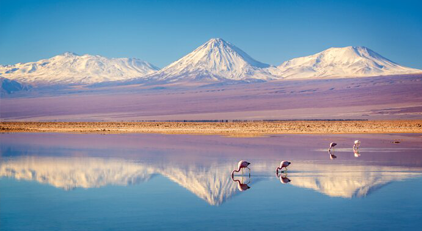
Atacama desert
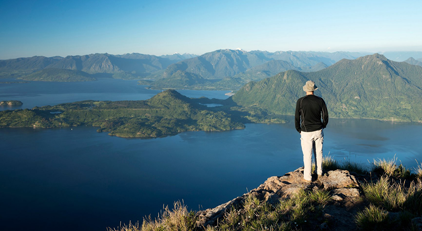
Lakes District
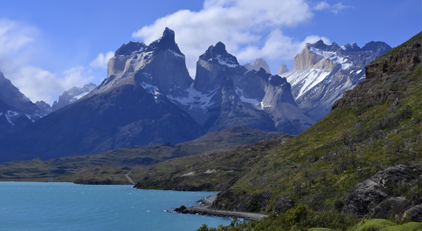
Torres del Paine
With the world’s driest desert to the north, massive ice fields to the south, and everything else in between, Chile is a narrow strip of land roughly 100 miles wide and 2,700 miles long. Tightly tucked between the Andes Mountains, the world’s second-largest mountain range, and the Pacific Ocean, Chile offers an extraordinary diversity of landscapes and climate zones. As a result of this unique geography, Chile has become an angler’s paradise, with literally thousands of rivers flowing from the high Andes through every type of environment imaginable, from temperate rainforests to high grassy plains and narrow mountain valleys.
Trout and salmon species are not native south of the Equator anywhere in the world, and Chile is no exception. First introduced to Chilean waters in the late 1800s, trout adapted remarkably well to local rivers and lakes, establishing healthy wild populations throughout much of the country. Today, anglers can find rainbow, brown, and brook trout, as well as wild runs of coho and Chinook salmon. Both brown and rainbow trout can also be found in sea-run forms.
The Andes Mountains reach their highest point at Mount Aconcagua, an impressive 22,835 feet above sea level, making it the highest mountain in the Americas and the Western Hemisphere. From this point south, the Andes gradually decrease in elevation while temperatures cool and precipitation increases, creating multiple environments ideally suited for trout. This is the region that has made Chile famous throughout the fly-fishing world.
From Chile’s capital, Santiago, all the way south to Tierra del Fuego, rivers flow through a remarkable variety of landscapes similar to what one would encounter traveling from Southern California to Alaska.
One of the aspects that makes Chile particularly attractive to anglers is its opposite seasons. While much of the Northern Hemisphere is in the grip of winter, anglers visiting Chile can enjoy dry-fly fishing under warm summer skies. At only 8.5 hours from many major U.S. gateways, Chile offers a convenient escape during the winter months. The best fishing season generally extends from November through April.
Another attractive aspect of Chile is the absence of dangerous wildlife. With the exception of mountain lions, Chile lacks bears, venomous snakes, and most of the poisonous insects commonly found in other wilderness destinations. Virtually anywhere in Chile you can sleep under the stars without worrying about being bitten or eaten, a significant advantage when exploring remote fishing areas.
Although trout can be found from the high-altitude waters of the Atacama Desert all the way south to Tierra del Fuego, from a fly-fishing perspective the most important regions are the following:
The Lakes District
Stretching from Temuco south to Chaitén, Chile's Lakes District is one of the country's most beautiful and diverse regions. Characterized by large glacial lakes interconnected by substantial rivers suitable for floating, as well as numerous smaller tributaries ideal for wade fishing, the region offers an extraordinary variety of angling opportunities.
The landscape is dominated by snow-capped volcanoes, crystal-clear lakes, rushing rivers, and extensive temperate rainforests. Among the most prominent volcanoes are Villarrica, Osorno, Calbuco, and Chaitén, all of which provide a dramatic backdrop to many of the region’s fisheries. Due to its location west of the Andes and its proximity to the Pacific Ocean, the Lakes District receives significantly more precipitation than much of Patagonia, creating lush forests and rich aquatic ecosystems that support abundant fish populations.
Historically, this region played a fundamental role in establishing Chile’s international reputation as a fly-fishing destination. Many of the country’s most famous trout rivers are found here, including the Petrohué, Futaleufú, Palena, Yelcho, and Figueroa Rivers, as well as countless productive lakes and spring-fed streams. Anglers can enjoy everything from dry-fly fishing for wild brown and rainbow trout to streamer fishing for larger fish, depending on seasonal conditions.
The southern portion of the Lakes District, particularly around Chaitén, Futaleufú, Palena, and Yelcho, is generally considered the premier fishing area. This region combines exceptional fishing with lower population density and a greater sense of wilderness than the northern lakes area. Here, anglers can choose between floating larger rivers, exploring secluded mountain streams, fishing productive lakes, or combining several different fisheries within the same trip.
Beyond fishing, the Lakes District offers outstanding opportunities for hiking, horseback riding, kayaking, birdwatching, and exploring Chile’s unique temperate rainforest environment. The region is also known for its welcoming small towns, German-influenced cultural heritage, excellent cuisine, and easy accessibility from major airports.
For travelers seeking a combination of world-class trout fishing, spectacular scenery, comfortable lodges, and a wide range of outdoor activities, the Lakes District remains one of the most attractive and versatile destinations in South America.
Aysén Region
Extending from the town of La Junta south to Villa O’Higgins, Aysén is Chile’s third-largest region, with a land area similar in size to the state of Nevada. What makes it truly remarkable, however, is its extremely low population density. Despite its vast size, it remains the least populated region in Chile, with only about 100,000 inhabitants spread across an immense landscape of fjords, glaciers, rivers, mountains, and the Northern Patagonian Ice Field.
Aysén is widely regarded as the heart of Chilean fly fishing and is home to many of the waters that have earned Chile its international reputation as a world-class angling destination. Thanks to its diverse geography, anglers can experience virtually every type of fishing imaginable, including float fishing, wade fishing, large freestone rivers, spring creeks, lakes, coastal waters, and remote mountain lakes.
The region is equally renowned for its exceptional dry-fly fishing opportunities. During spring and autumn, streamer fishing becomes particularly productive as large trout migrate into rivers in preparation for spawning.
Chile’s fly-fishing capital is generally considered to be the area surrounding the city of Coyhaique. Coyhaique is reached through Balmaceda Airport, located approximately 50 minutes from the city. Access is also possible by road from Argentina or via the Carretera Austral from Puerto Montt, although both alternatives require several days of travel.
Perhaps Aysén’s greatest attraction is the opportunity to fish in true solitude. Vast expanses of public and private land offer anglers the chance to explore waters far removed from roads, crowds, and other fishermen. At places such as Estancia de los Ríos, located within a 445,000-acre private ranch north of Coyhaique, it is entirely possible to fish for several days without encountering another person, enjoying a level of exclusivity and wilderness that is increasingly rare in today’s world.
Magallanes and Tierra del Fuego
Continuing south, the Magallanes Region and Tierra del Fuego represent the southernmost frontier of Chilean Patagonia and rank among the most remote and spectacular landscapes on Earth. This vast region encompasses Torres del Paine National Park, the Strait of Magellan, the fjords and channels surrounding the Southern Patagonian Ice Field, and the windswept plains and mountains of Tierra del Fuego.
Unlike the forested landscapes of the Lakes District or the diverse river systems of Aysén, Magallanes is defined by open spaces, dramatic mountain scenery, powerful rivers, immense glaciers, and a strong maritime influence. The region experiences a harsher climate, with frequent winds and rapidly changing weather conditions that contribute to its wild and untamed character.
For anglers, Magallanes is best known for its exceptional sea-run brown trout fisheries. The rivers of Tierra del Fuego have achieved worldwide recognition for producing some of the largest sea-run brown trout on the planet. Fish exceeding 20 pounds are caught every season, and specimens over 30 pounds are a realistic possibility. The Río Grande, primarily on the Argentine side of the island, is the best-known example, but Chilean Tierra del Fuego also offers excellent opportunities to pursue these magnificent fish in a more secluded setting.
The region is also home to productive trout fisheries in rivers, lakes, and spring creeks, as well as opportunities for fishing near the coast and throughout its extensive network of fjords and channels. While the fishing season is shorter than in northern Patagonia, the quality of the fish and the dramatic scenery more than compensate.
The most developed fishing operations and experienced outfitters in this area are concentrated around the town of Puerto Natales.
Beyond fishing, Magallanes—and particularly Puerto Natales—offers some of the finest wilderness experiences in South America. Visitors can hike among the granite towers of Torres del Paine, explore glaciers and fjords by boat, observe penguins, guanacos, condors, and marine mammals, or simply enjoy the sense of remoteness that defines the region.
For travelers seeking vast landscapes, true wilderness, and the possibility of encountering trophy-sized trout in one of the world’s last great frontiers, Magallanes and Tierra del Fuego offer an experience unlike any other destination in Patagonia.